Tampilkan postingan dengan label science. Tampilkan semua postingan

Senin, 10 Januari 2011

Scary pork?

In a small complex of nondescript barns set in the flat, snow-covered fields of Ontario, Enviropig is a scientific project which, some argue, represents the new frontier of a technology that could benefit millions of people around the world.

For others what is happening here is weird, dangerous science.

The pigs they are breeding could be among the first genetically modified farm animal to be approved for human consumption.Each pig contains genes from mice and E.coli bacteria, which have been inserted into their DNA with absolute precision.

Those genes make a small but important difference to the way these pigs process their food.

Ordinarily, pigs cannot easily digest chemicals called phosphates. That means that the stuff that comes out of the back end can be toxic and damaging to the environment. The phosphates are easily washed into waterways, where they can produce a hugely fertile environment for plants. But the plants grow so rapidly that they choke the stream or river and cause huge damage to the ecosystem.

The genetic modification enables these pigs to digest phosphates, which means they are less polluting and cheaper to feed.

Source

Jumat, 31 Desember 2010

What's new?

New species discovered in 2010

From invisible squids to bald parrots to deep-sea fish with teeth on their tongues, guardian.co.uk picks the best of of 2010's newly discovered animals.

This image provided by NOAA shows a deep-sea chimaera. Chimaeras are most closely related to sharks, although their evolutionary lineage branched off from sharks nearly 400m years ago, and they have remained an isolated group ever since.

Kamis, 30 Desember 2010

Lord of the Ants

A fascinating man - Ed Wilson is the ant man.

Over six decades at Harvard University he has discovered more about ants than anyone else in history. He has thrown into relief for the general public just how important ants are—how they represent 25% or more of the insect biomass on the planet, how collectively they weigh more than all the humans in the world, how they assist humans by aerating the soil, suturing wounds, or, as in South Africa, harvesting the rooibos seeds for farm workers to collect. And how ancient they are: in 1966 Wilson and his colleagues identified an ant in a shard of amber that was 80m years old. Ants emerged along with flowering plants 130m years ago. By contrast, the genus Homo diverged 2m years ago, has existed as Homo sapiens for a fraction of that time, with a civilization of 20,000 years or so.

Read more: Ants and Us, Published on More Intelligent Life
or watch NOVA: Lord of the Ants on YouTube

Rabu, 08 Desember 2010

Did Animals Make Humans Human?

A well-researched article in boston.com examines anthropologist Pat Shipman's premise that the unique ability to observe and control the behavior of other animals is what allowed us to become the humans that we are.

While some of Shipman's colleagues are skeptical, others describe her work as a promising new framework for looking at human evolution, one that highlights the extent to which the human story has been a collection of interspecies collaborations — between humans and dogs and horses, goats and cats and cows, and even microbes.

read more

Selasa, 23 November 2010

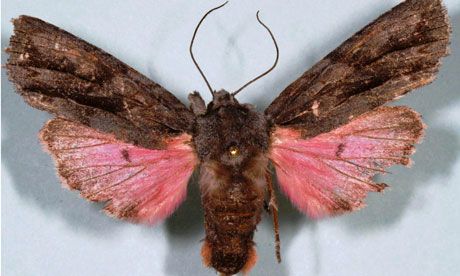
New large pink moth discovered in Arizona

The mountains of southeastern Arizona have been a favorite collecting site for lepidopterists for generations. Yet new species continue to be described at the rate of about three per year.

One of the latest discoveries is the largest member of the genus Lithophane, a group of particularly large and beautifully coloured moths. Lithophane leeae has a forewing length 25% larger than the previous record, measuring 25mm, and more extensive and brighter pink coloration. So far known from a single female collected at 7,700ft elevation in mid-June in the Chiricahua Mountains, this species is predicted to feed on pine, like related species.

Source

Rabu, 24 Juni 2009

You can catch MRSA from animals

An infectious superbug, a strain of bacteria known as MRSA, which has evolved a resistance to antibiotics, has long plagued hospitals but in recent years has become more common in homes. About two years ago, scientists began to suspect that pets can spread this bacteria.

In the July edition of The Lancet Infectious Diseases, Richard Oehler of the University of South Florida College of Medicine and colleagues lay out the latest thinking on MRSA (methicillin-resistant Staphylococcus aureus) and pets.

The infections can be transmitted by animal bites and most threaten young children, the researchers note. "MRSA colonization has been documented in companion animals such as horses, dogs, and cats, and these animals have been viewed as potential reservoirs of infection."

"Bites to the hands, forearms, neck, and head have the potential for the highest morbidity," the scientists warn. They conclude: "Much more remains to be learned about MRSA and pet-associated human infections."

Source

Photo from Flickr, by GrahamIX

Senin, 22 Juni 2009

2,500-year-old bird's nest found

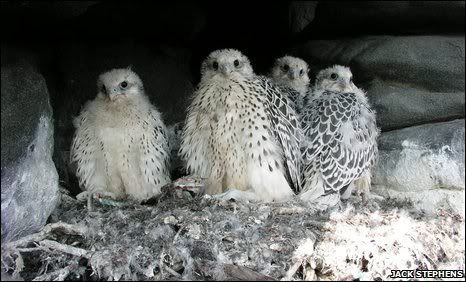
A 2,500-year-old bird's nest has been discovered on a cliff in Greenland.

The nesting site is still continually used by gyrfalcons, the world's largest species of falcon, and is the oldest raptor nest ever recorded.

Three other nests, each over 1,000 years old, have also been found, one of which contains feathers from a bird that lived more than 600 years ago.

Like many falcons, gyrfalcons do not build nests out of sticks and twigs, but typically lay eggs in bowl-shaped depressions they scrape into existing ledges or old nests made by other birds such as ravens.

Source

Jumat, 05 Juni 2009

What happens if you tickle a gorilla?

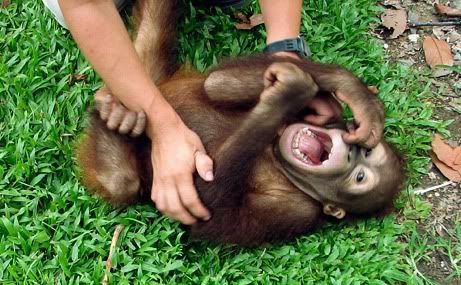
By tickling young gorillas, chimpanzees, bonobos, and orangutans, researchers say they learned that all great apes laugh.

Their findings suggest we inherited our own ability to laugh from the last common ancestor from which humans and great apes evolved, which lived 10 to 16 million years ago.

Primatologist and psychologist Marina Davila Ross of the U.K.'s University of Portsmouth led a team that tickled the necks, feet, palms, and armpits of infant and juvenile apes as well as human babies. The team recorded more than 800 of the resulting giggles and guffaws.

Source

(via Boing Boing)

Jumat, 27 Maret 2009

Are cavers spreading lethal bat disease?

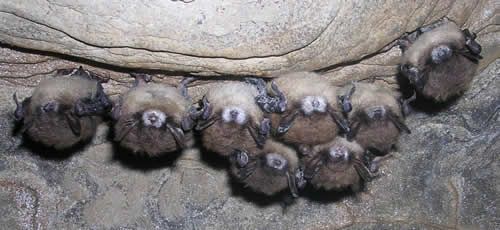
The white fungus that appears on bats' noses and wings — so-called white-nose syndrome — has killed more than a half-million bats over the past three winters, but scientists had not been able to figure out how the fungus got into the bat caves and why it spread.

Now, they have big clue: Humans, specifically cavers, who "may be spreading the causative agent."

Source

Photo Credit: Nancy Heaslip, New York Dept. of Environmental Conservation
Little brown bats with white-nose syndrome, New York

Sabtu, 28 Februari 2009

Any dog can bite but most don't

Dog bites happen, but they don't happen often, and many bites are preventable.

That message, delivered Thursday at a forum in Denver, was gleaned from data taken in Colorado over a year-long period.

The Coalition for Living Safely With Dogs, made up of Colorado veterinarians, animal-control officers, animal-care professionals and others presented the data at the group's second annual forum.

"The data shows that any dog can bite but most don't," said Nick Fisher, a coalition member.

The dog-bite surveys were taken from July 2007 to July 2008 and covered 17 "districts" in Colorado.

The coalition study tallied 2,060 bites. That's about 1 bite for every 350 dogs, less than one-third of one percent.

Of the 2,060 bites, Labrador retrievers made up the biggest percentage on the bite list.

Labs accounted for 13.3 percent of the reported bites; pit bulls, 8.4 percent; German shepherds, 7.8 percent; Rottweilers, 3.9 percent; and Chows, 3.5 percent.

Source

Jumat, 27 Februari 2009

Funky fish found - the frogfish

A funky, psychedelic fish that bounces on the ocean floor like a rubber ball has been classified as a new species, a scientific journal reported. The frogfish — which has a swirl of tan and peach zebra stripes that extend from its aqua eyes to its tail — was initially discovered by scuba diving instructors working for a tour operator a year ago in shallow waters off Ambon island in eastern Indonesia.

Each time the fish strike the seabed, they push off with their fins and expel water from tiny gill openings to jet themselves forward. That, and an off-centered tail, causes them to bounce around in a bizarre, chaotic manner.

Photo credit: David Hall
Source

Selasa, 17 Februari 2009

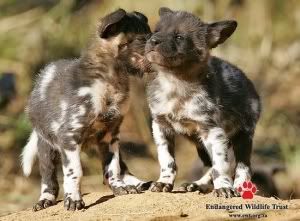
How cool is this? African wild dogs are foster moms

According to a study, published in the South African Journal of Wildlife Research, packs of African wild dogs showed a willingness to take in the orphaned pups, no questions asked.

In three different cases, a total of eleven orphaned African wild dog pups were released within view of a smaller than average wild pack. Each time, the pups were soon approached by the dominant female of that pack, and within minutes, the orphaned pups were adopted cared for and fed by the dominant female. In one case, the pups got scared and ran away from the pack, almost immediately. Yet even after such a brief introduction, the adoptive pack then began to scour the area to find the missing pups. Once reunited, the pups were greeted as if they were missing family members.

This study provides conservationists with a better understanding as to how they can use facilitated adoptions as a conservation tool in the wild.

via Oh, for the love of science!

Kamis, 12 Februari 2009

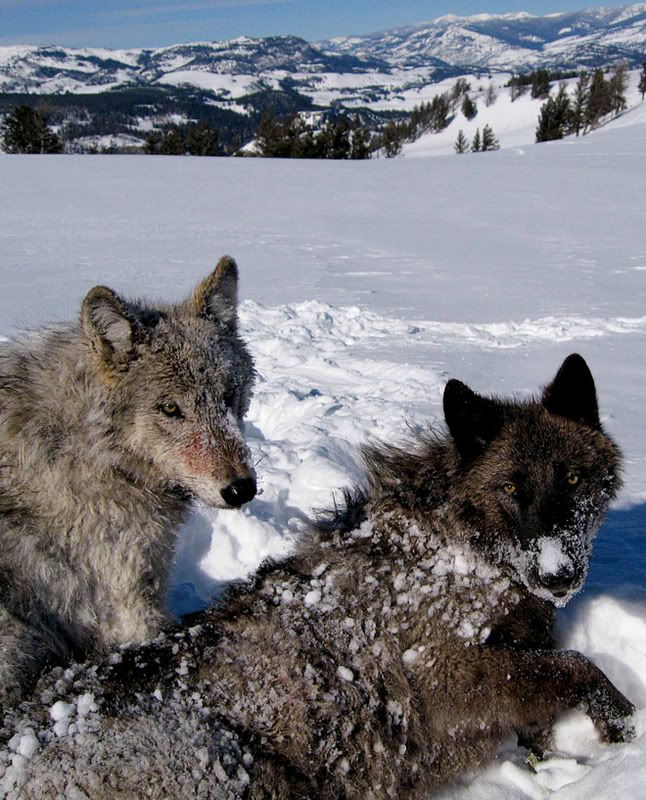
Black Wolves the Result of Interbreeding With Dogs

Biologist Tovi Anderson of Stanford University and her team compared the genes of wolves from Yellowstone National Park and the Canadian Arctic to those of domestic dogs and coyotes. They found that, in each species, the black individuals have the same mutation, which first arose about 45,000 years ago. And molecular-clock analysis showed the mutation was oldest in dogs, suggesting it originated with them and then spread to wolves and coyotes through interbreeding.

This all happened in North America, because there are no black wolves in Europe or Asia (except for an Italian population that has hybridized very recently with dogs). And wolves picked up the black-coat mutation in the distant past, perhaps 12,000-15,000 years ago, when people first crossed the Bering Land Bridge from Asia.

The black coat seems to provide an advantage to forest-dwelling wolves, meaning dogs passed on some useful genetic diversity to their wild cousins.

Source

Rabu, 11 Februari 2009

Imagine a world without vultures

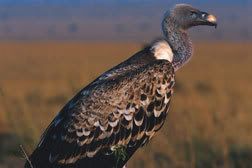
Constance Casey at Slate theorizes a world without vultures in "Vulture World".

A mysterious die-off of Asian white-backed vultures has led to a pileup of domestic animal carcasses and an increase in the population of rodents and feral dogs. It turned out that an anti-inflammatory drug—diclofenac—used on sick livestock kills vultures even in low doses. Though the Indian government is phasing out the veterinary use of the drug, the vulture population hasn't rebounded. One social consequence has been that members of the Zoroastrian Parsi community, who have used vultures to dispose of human corpses, now have to cremate their dead.

These are fascinating birds. Read more.

Selasa, 10 Februari 2009

Baby Chimps Given Human Love Are Smarter

Orphaned infant chimpanzees that received attentive, nurturing care from human surrogate mothers were found to be more intellectually advanced than the average human baby when both groups were compared at the age of nine months, according to a new study published in the latest issue of Developmental Psychobiology.

When the chimps were nine months old, they took an IQ test normally used to evaluate human infant development. The chimps who had received responsive care aced the test, even surpassing the scores of average human infants tested at the same age.

Source

Jumat, 06 Februari 2009

Back from the dead (briefly)

An extinct mountain goat that was once common in the Pyrenees briefly became the first animal to be brought back from extinction, as researchers used frozen DNA to produce a clone. But the newborn kid died within minutes of birth due to breathing difficulties.

The Pyrenean ibex, or bucardo, is a subspecies of the Spanish ibex that is believed to have died out completely in 2000. Before the death of the last known individual (a 13-year-old female known as Celia), biologists captured her and took cells from her skin and ears, which were frozen in liquid nitrogen.

An earlier cloning attempt using the skin cells failed during gestation. But the latest attempt involved the creation of 439 ibex-goat hybrid cloned embryos made by inserting the cell nuclei of the ibex’s skin cells into the egg cells of domestic goats which had their own cell nuclei removed. Of these cloned embryos, 57 were transferred into surrogate mothers and seven resulted in pregnancies, but only one goat gave birth and the newborn clone died after seven minutes as a result of lung deformities.

Source: Discover

Rabu, 04 Februari 2009

World's first commercially cloned dog

[I just wonder, how many abandoned puppies could have been saved for this amount of money?]

A Boca Raton, Florida, couple paid a California firm $155,000 to clone their beloved Labrador retriever, who died from cancer a year ago. The clone, a 10-week-old puppy dubbed Lancey, was hand-delivered to them earlier this week by Lou Hawthorne, chairman of BioArts International, a biotechnology company.

Source: CNN
Related Posts Plugin for WordPress, Blogger...